By 2012, Wolverine was a billion-dollar conglomerate, hoovering up Saucony, Sperry, and Keds, and the American-made work boot that had started the whole thing was little more than a curiosity. Then came the heritage menswear revival, and suddenly the footnote was the story again.
Wolverine was founded in 1883 by Fredrick Hirth and G.A. Krause in Grand Rapids, Michigan. The two men set out to produce tough, functional boots and gloves for the rural American working market. By 1901, Krause organised the Rogue River Electric Light and Power Company to bring power to Rockford, Michigan, allowing him and his sons to build and operate a shoe factory. By 1903, Krause and his sons were producing 300 boots a day in their new factory.
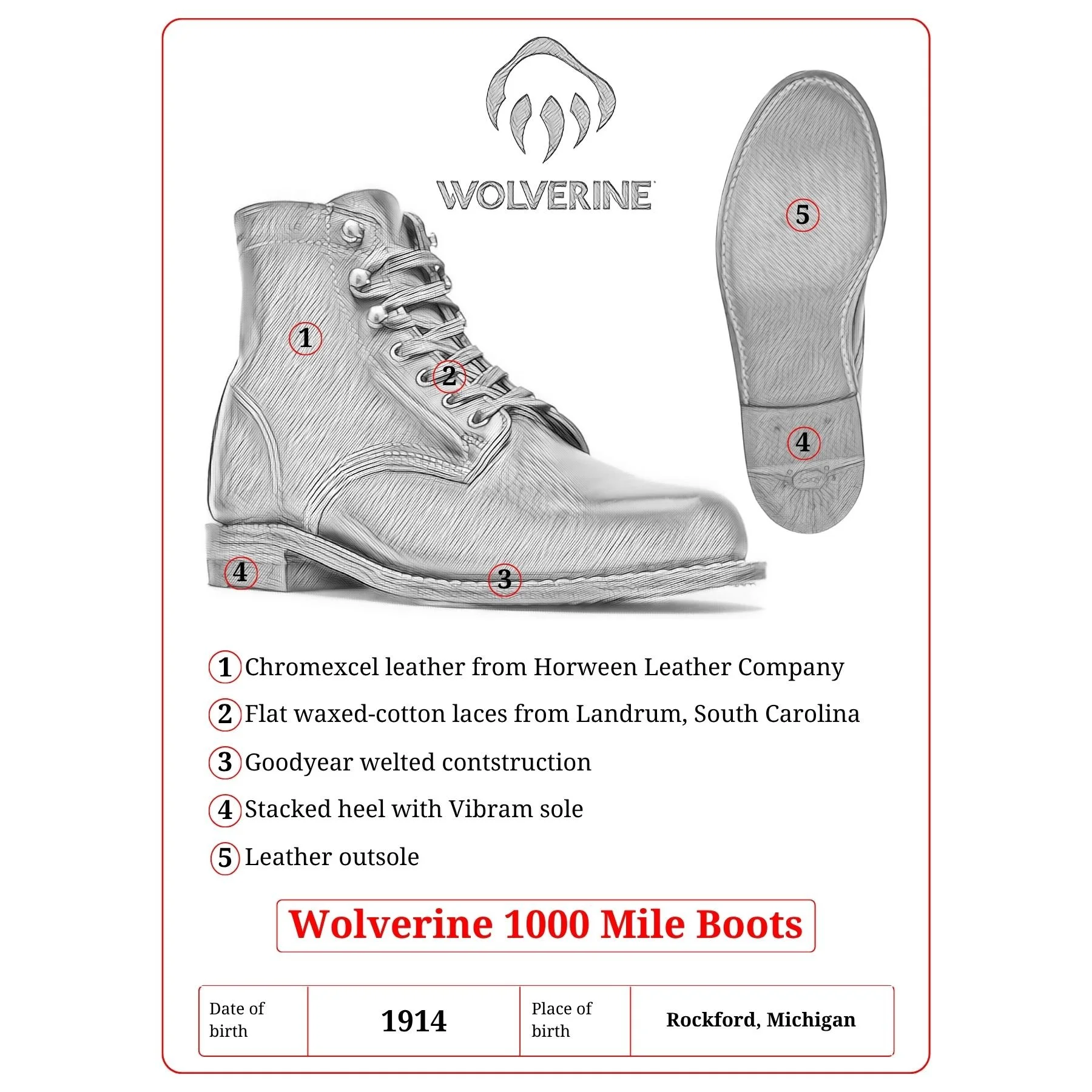
In 1914, the brand name Wolverine was chosen for its most durable horsehide leather boots, presumably in reference to the animal's reputation for toughness and ability to cover vast distances. Promoted as "1,000-mile shoes," sales of the heavy-duty Wolverine boots helped increase corporate earnings almost 700 per cent from 1916 to 1923.
In 1919, Wolverine began national advertising, with work shoes sold by one of the earliest national sales forces, becoming a household name.
As horsehide became more expensive and difficult to obtain in the 1950s, Wolverine began experimenting with cheaper pigskin. When tanned, pigskin was soft and flexible, but it was not tough enough to be used in Wolverine's traditional work boots and shoes. So Krause designed a pair of casual, soft, comfy pigskin shoes. Launched in 1958, the result was Hush Puppies, a brand that became far better known than its parent company throughout the 1960s & 70s. As imported footwear began to outcompete American-made boots, and new safety standards on worksites made the 1000 Mile Boot redundant, it was Hush Puppies' success that kept the brand afloat.
In 2012, the company became a substantial footwear conglomerate, nearly doubling in size with its acquisition of Saucony, Keds, and Sperry from Collective Brands. The product that founded the business, the American-made boot, was becoming a footnote.
However, the heritage menswear revival of the mid-2010s, which brought American workwear, selvedge denim, waxed cotton, and Goodyear-welted boots back into fashion-conscious menswear circles, once again drew attention to the 1000 Mile boot which had maintained all the ingredients likely to appeal to heritage menswear enthusiasts: A design which could be traced back to the first boot introduced in 1914: a classic leather outsole with a Vibram heel from Williamsport, Pennsylvania; flat waxed cotton laces from Landrum, South Carolina; Goodyear welt construction that is durable, flexible, and allows the boot to be resoled for years of wear and premium leather from Horween Leather Company.
Horween Leather Company is a Chicago tannery whose Chromexcel hide is packed with oils and waxes, including beeswax and beef tallow, making it highly water-resistant and long-lasting, helping it resist drying out. As a pull-up leather, it develops a distinctive patina. Chromexcel scuffs fairly easily, but because the leather is so heavily conditioned, a little buffing brings the boots back to their original appearance.
Though most of the Wolverine range is manufactured in China and Vietnam, the 1000 Mile Boot is still made in America, so whilst made by an enormous conglomerate, the 1000 Mile remains one product in the portfolio where the original promise of the brand (a made in America boot built to last a thousand miles) remains, more or less, intact.
Check them out here.