
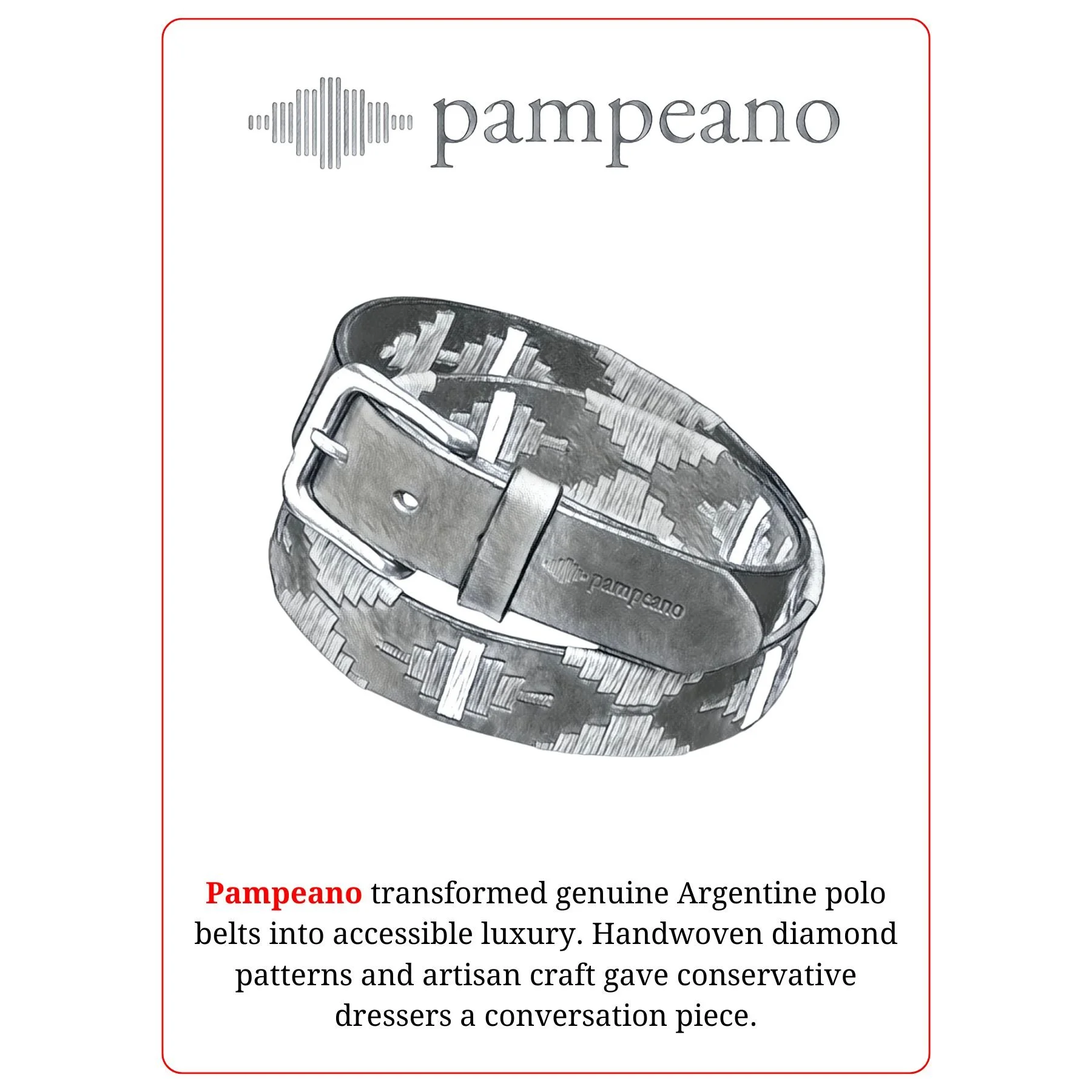
The Pampeano polo belt has become an iconic accessory that bridges authentic Argentine craftsmanship with contemporary British and European fashion. However, its story is relatively recent compared to many heritage brands.
Pampeano belts originated from the polo-playing tradition of Argentina's Pampas region. They are handwoven by Argentine artisans using traditional techniques passed down through generations, creating the distinctive diamond-pattern "pampa" weave from premium Argentine leather. This is not manufactured heritage; these are genuine polo belts that Argentine players have worn for decades and have since been adopted by the broader fashion market.
The brand gained significant traction in the UK market during the 2010s. Britain's fascination with polo and Prince William and Prince Harry playing in charity matches created aspirational associations. At the same time, the belt's craftsmanship story resonated with the growing appetite for artisanal, story-driven fashion accessories. Pampeano positioned itself at an accessible price point, making Argentine polo heritage attainable for middle-class consumers instead of remaining exclusive to polo players or luxury buyers.
The Pampeano belt became popular in British country casual and "Sloaney" circles, at the intersection of rural lifestyle, equestrian culture, and urban professionals aspiring to country-house weekend aesthetics. It fits well with Barbour jackets and Dubarry boots. The colourful woven leather patterns add visual interest to otherwise conservative chinos-and-shirt combinations, giving wearers a conversation piece.
Pampeano's success showed that authentic craft narratives could command broad appeal in the accessories market, influencing how other brands position handmade leather goods. It is an interesting case study in how a geographically distant authentic product can gain traction through elite cultural associations while remaining accessible enough for broad market appeal.
The brand has expanded beyond belts into dog leads, wallets, and other leather goods. Still, the polo belt remains their signature piece, a rare example of an accessory that transitioned from functional sporting equipment to mainstream fashion staple while maintaining its craft credentials.